An organizer is useful when it makes your own packing routine easier. Before buying a set, decide whether you want separate groups of clothing, less bulk, or both.
Start with the problem you want to solve
If finding socks or unpacking at several stops is the problem, a regular cube may be enough. Divide your kit into a few useful groups: daily outfits, sleepwear and small accessories. More cubes are not automatically more organized; too many separate containers can make a small bag awkward to use.
Compression cubes add a second closing stage designed to squeeze soft contents. They can be worth comparing for bulky clothing, but extra zippers, fabric and structure have a cost in weight and convenience. Decide whether that tradeoff matters for your trip.
Compare the shape with your actual bag
Measure the interior, including any taper or curve near the top. A set that fills a rectangular suitcase neatly may leave awkward gaps inside a narrow backpack. Leave room for the laptop compartment, toiletries and items that should remain easy to reach.
A simple rehearsal helps: fold your normal clothing into two or three groups and arrange them inside your current bag. Note which group gets opened most often. That gives you a practical starting size instead of relying on a generic number of outfits.
Organization and airline limits are separate checks
Neither style changes the airline’s external size or weight allowance. A compressed kit can still push out a soft bag’s pockets or tempt you to add heavier items. Measure and weigh the fully packed bag after any change to your organizers.
For a sourced regular-cube example, the Eagle Creek Isolate set contains XS, S and M cubes. We have not compared its packing efficiency against a compression set, so we do not claim a percentage of space saved.
A short decision checklist
- Choose regular cubes when simple grouping is your main goal.
- Compare compression cubes when soft clothing bulk is a recurring problem.
- Check the empty weight, dimensions and opening style before buying.
- Keep one essential outfit accessible if you stop before reaching your accommodation.
- Try packing fewer items before adding a more complicated organization system.
Keep exploring: our bags & packing hub brings the buying guides and product assessments together.
See the published product details
These are sourced specification assessments, not hands-on tests. Prices are dated snapshots.
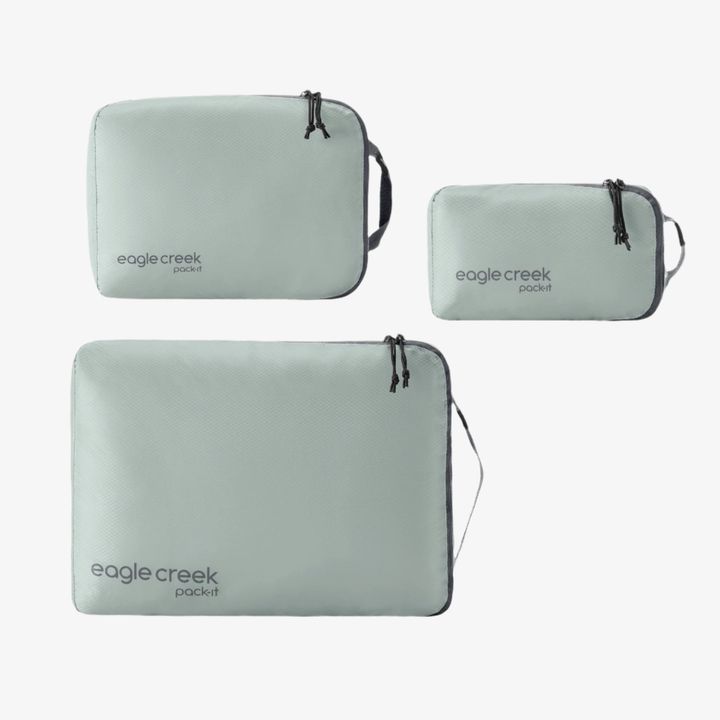
Eagle Creek
Pack-It Isolate Cube Set
Travelers who want separate clothing groups without adding a rigid organizer.
$59USD · checked 2026-10-05
Buy at Eagle CreekDirect merchant link · not an affiliate link
A FEW GOOD QUESTIONS
Before you pack
Do I need compression cubes for a carry-on backpack?
No. Start with your actual clothing kit. Regular cubes may organize it well enough; compression is a separate feature with its own weight and convenience tradeoffs.
Are the Eagle Creek Isolate cubes compression cubes?
The XS/S/M Isolate set featured here is a regular packing cube set. We do not describe it as having a dedicated compression zipper.
Sources & editorial notes
Manufacturer details and airline examples checked October 5, 2026. Policies, prices and products can change. These guides are editorial planning advice; they do not claim hands-on product testing.